Zaboor
A digital Urdu hymnal for the Christians of Pakistan. Psalms, hymns and prayers in Urdu script and Roman Urdu, fully offline, free, no ads. Six weeks from the idea to both app stores. This is the whole account of how it came to exist.
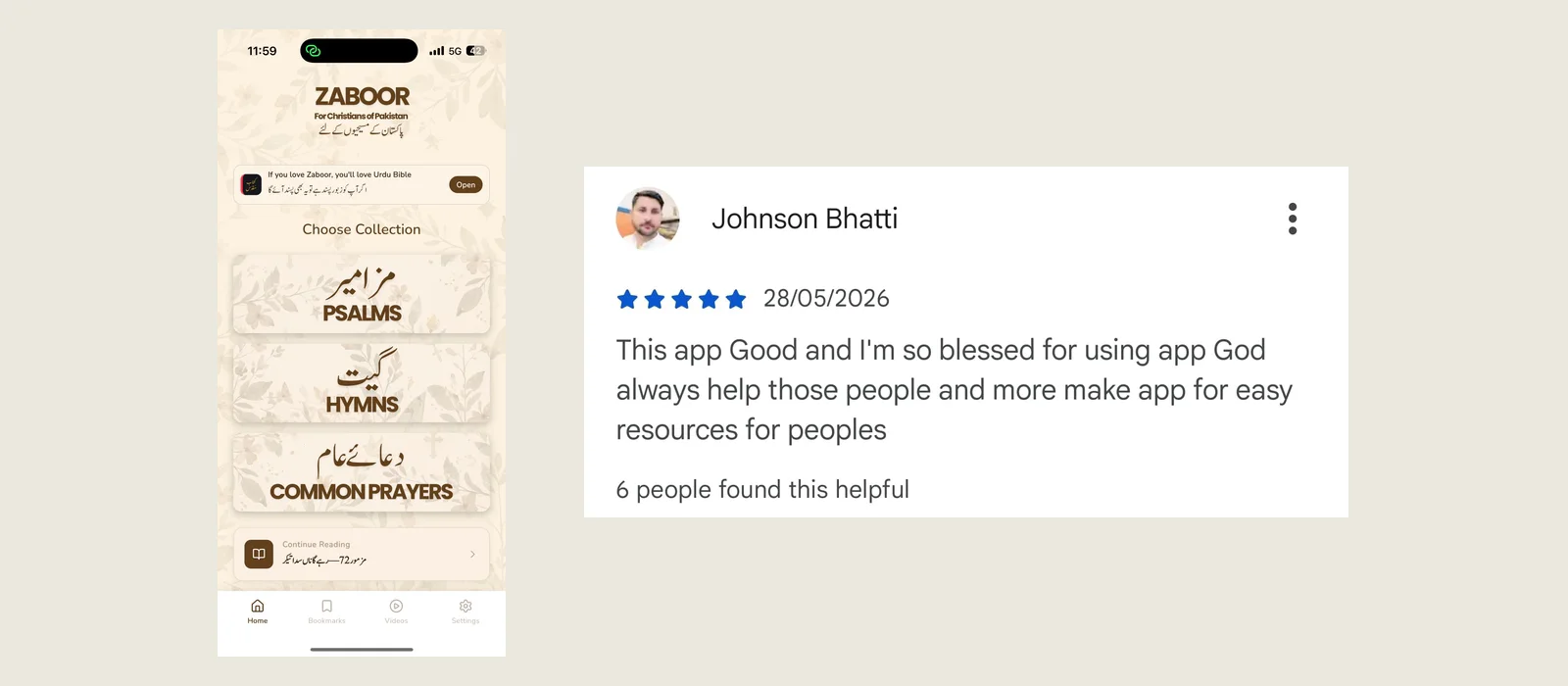
Snapshot
- What it is
- Digital Urdu hymnal — Psalms, hymns, prayers
- Built by
- Samson Clement & Simon Clement
- Idea
- 4 September 2025, Kuwait
- Launched
- 18 October 2025, iOS & Android
- Stack
- Flutter, local JSON hymn database
- Today
- 25,000+ downloads · ~700 daily · 4.8 ★
- Price
- Free. No ads, no subscription
- The app
- Zaboor →
Where it started
4 September 2025. A Thursday service of the Church of Pakistan in Kuwait. The idea turned up during the singing, and it turned up as an irritation rather than an idea.
A hymn number was called out and the congregation stopped singing to go and find it. Pages flipping. People leaning across to see where their neighbour had landed. Half the room sharing a book with the person beside them because they hadn't brought their own. By the time most people found the page, the verse was half over.
This happens every week. It is a small, ordinary, weekly frustration that everybody had quietly accepted as the price of singing together.
Sitting there, the fix was obvious in the way it probably only is if you write software for a living. Everyone in that room already had a phone in their pocket, and hymns are text. That is the entire problem. There was no technical reason for a congregation to lose the first verse of every song to a page hunt.
The pitch went to Simon the same evening. He was in immediately, and for the same reason: he isn't confident reading Urdu script either, so he knew exactly how many people this would help. Underneath it was the thought that keeps most useful things from ever existing — who else is going to think of this, and then actually go and build it?
Two decisions on day one
The first was Roman Urdu, not just Urdu script. A large part of the Pakistani Christian community speaks Urdu fluently but cannot read the script comfortably, and that includes both of us. We know the hymns by sound, because we learned them by hearing them, not by reading them. A hymnal in Urdu script alone serves the people who were already doing fine with the printed book and does nothing for everyone else.
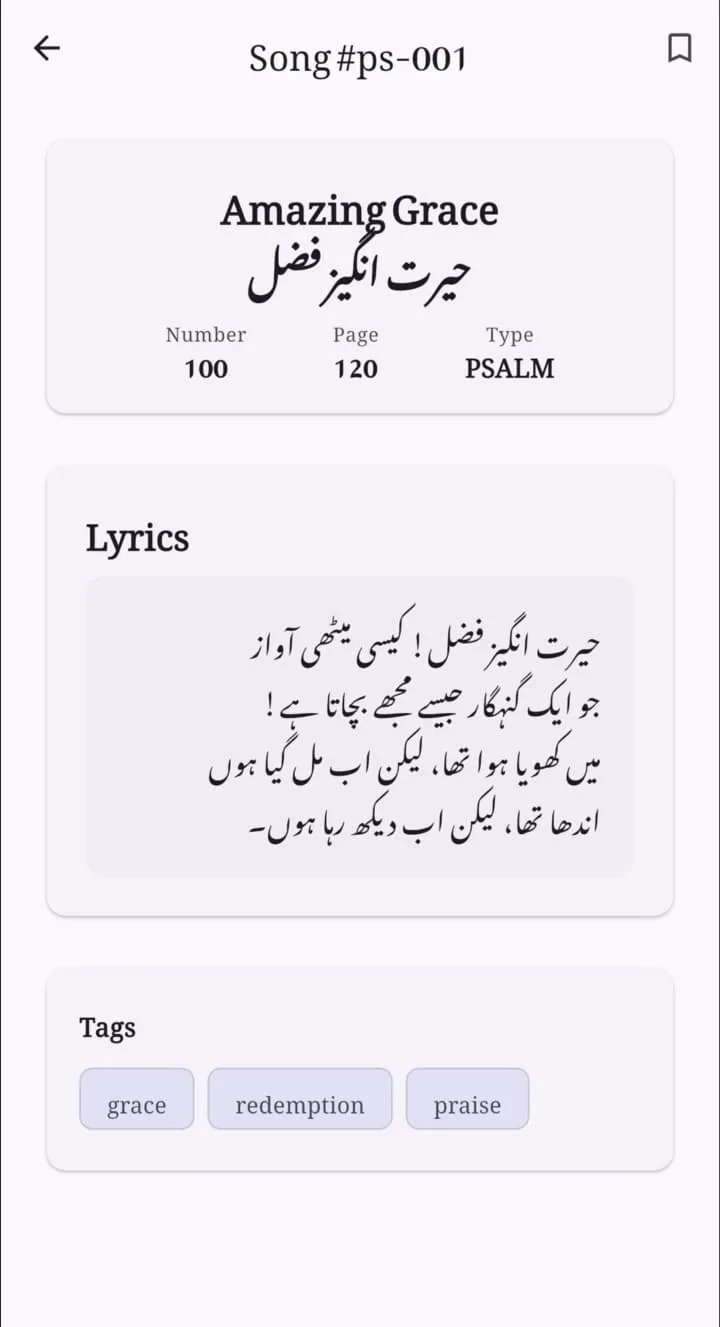
So Zaboor carries both, and carries them together. Every verse appears in Urdu script with the Roman Urdu directly beneath it, so you can follow either one and never lose your place between them. Titles get an English gloss too: اوہ دھن ہے becomes Oh Dhan Hai (Blessed is the One). It is the thing people mention most.
The second was no ads, ever. The app has never made money and was never meant to. Both of us have income from our work, so it didn't need to earn. Putting an advertisement between a person and a hymn, during worship, would have broken the one thing it exists to do.
Neither of those was a business decision. That is precisely why we could make them.
It was called Geet first
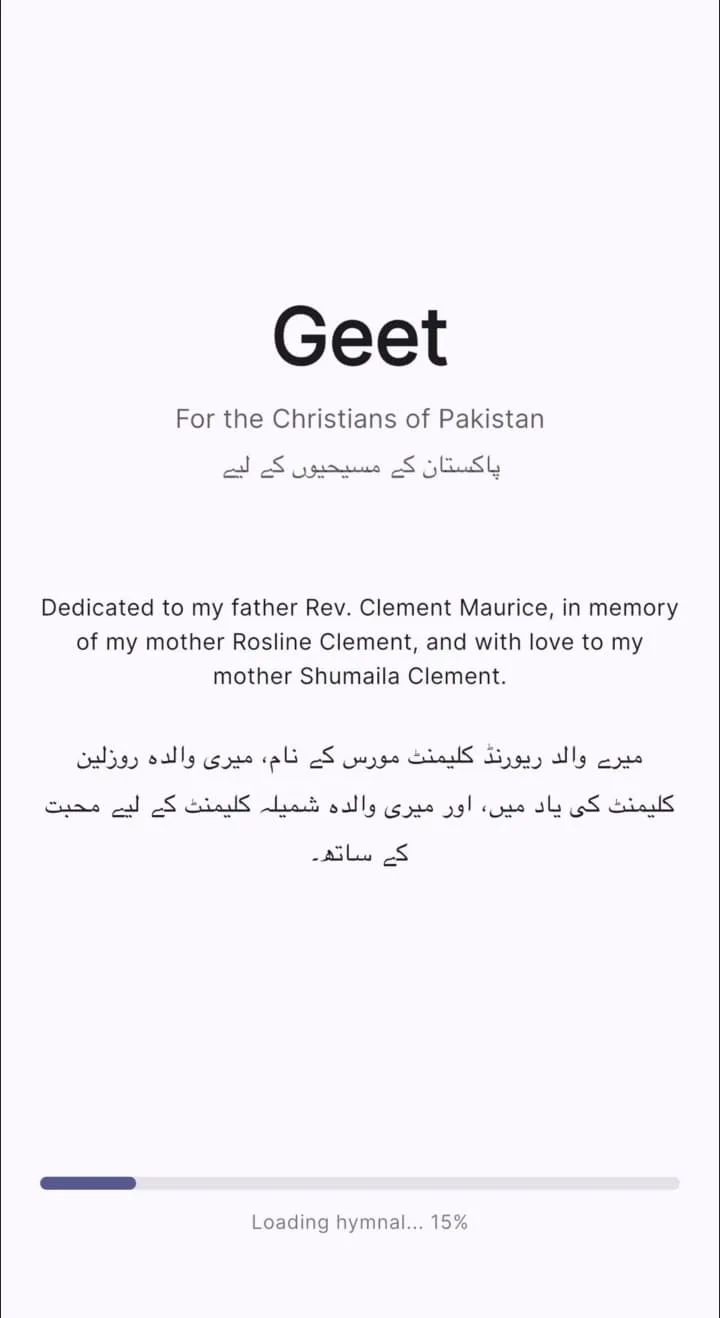
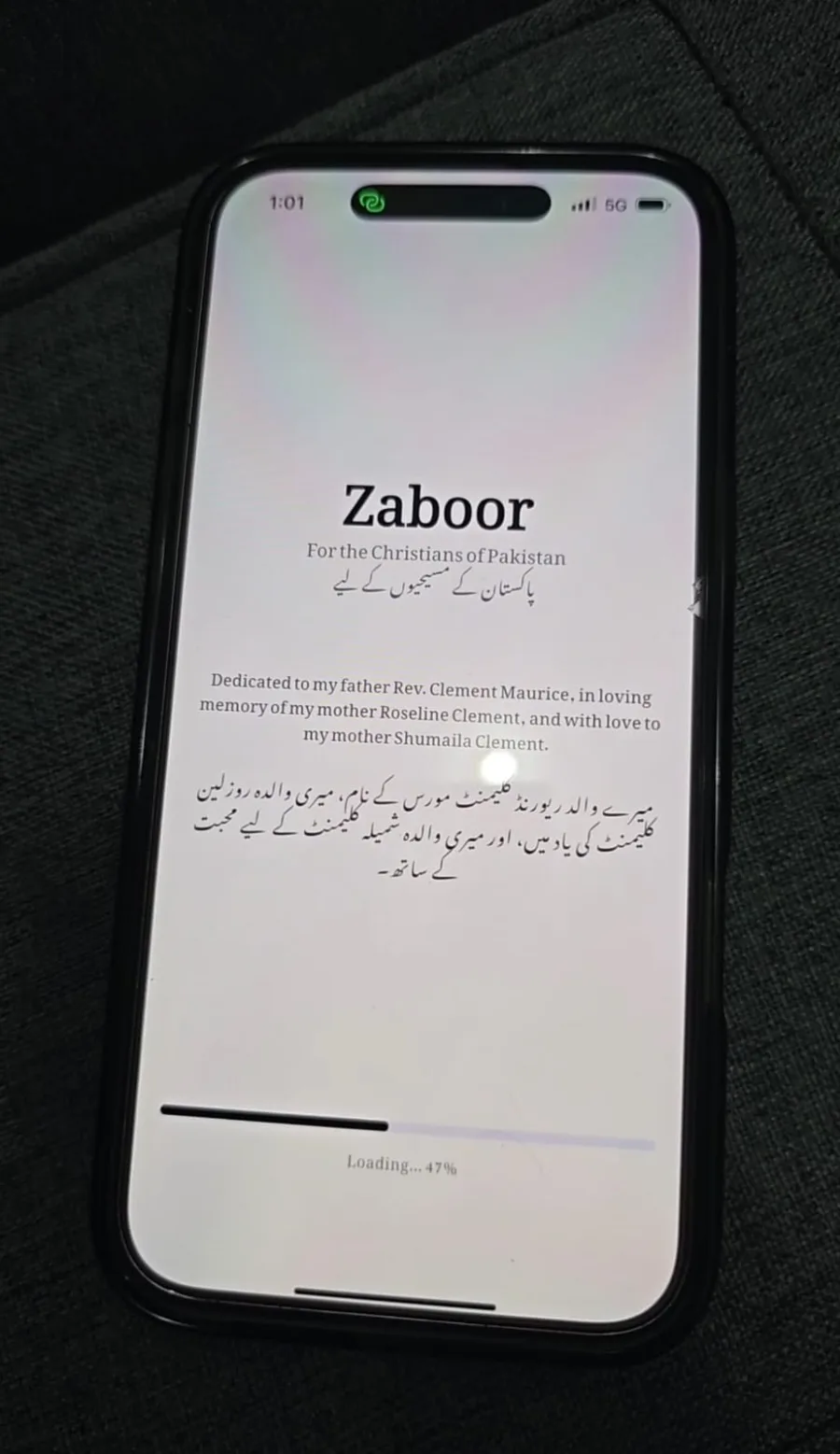
The original working name was Geet — the everyday word for the songs, and what people actually say when they ask for one. The earliest builds carry it on the splash screen, along with the dedication that has been in the app since the first version: to our father Rev. Clement Maurice, in memory of our mother Roseline Clement, and with love to our mother Shumaila Clement.
We changed the name to Zaboor before launch. The old one didn't disappear, though. Open the app today and the second collection is still گیت. It stopped being the name of the app and became the name of a section.
Designing for two seconds
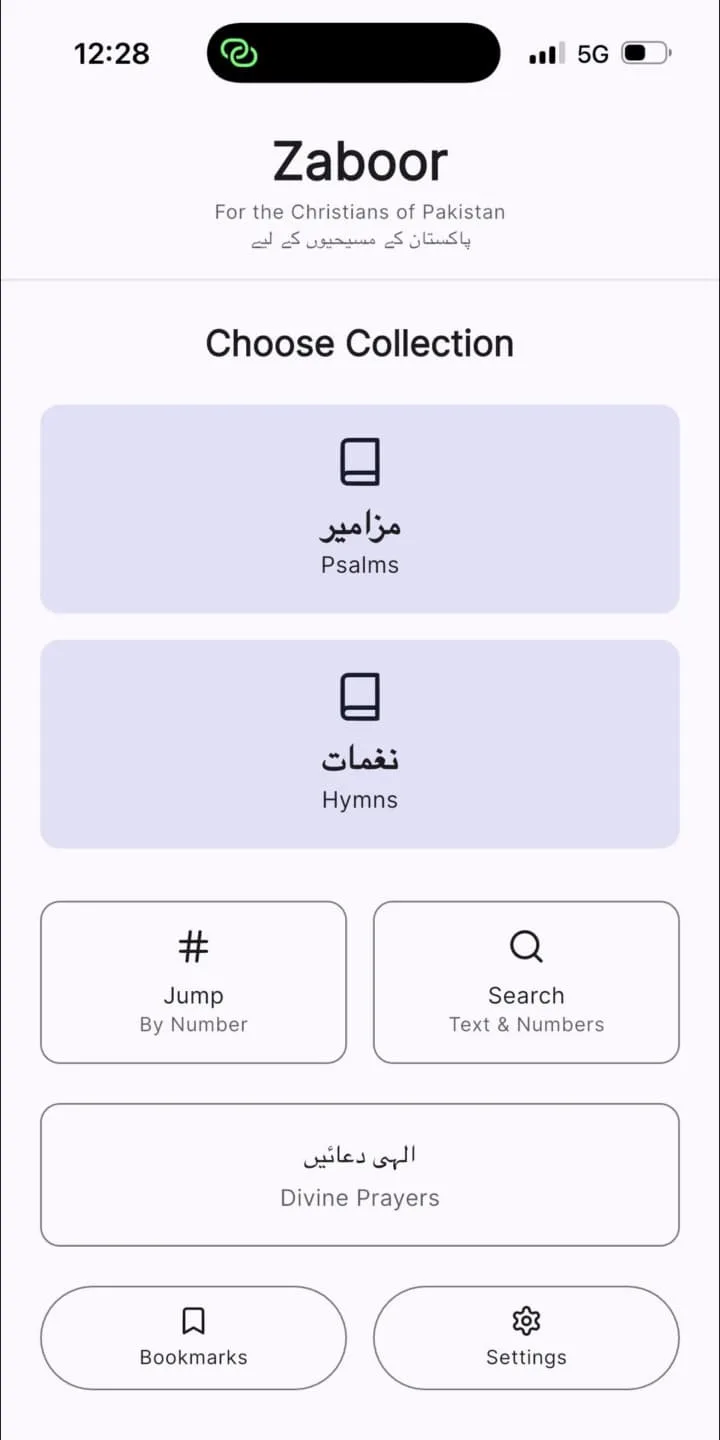
The first work wasn't code. It was structure, and it came out of a single question: what does a person actually need in the two seconds between hearing a number called out and needing to be singing?
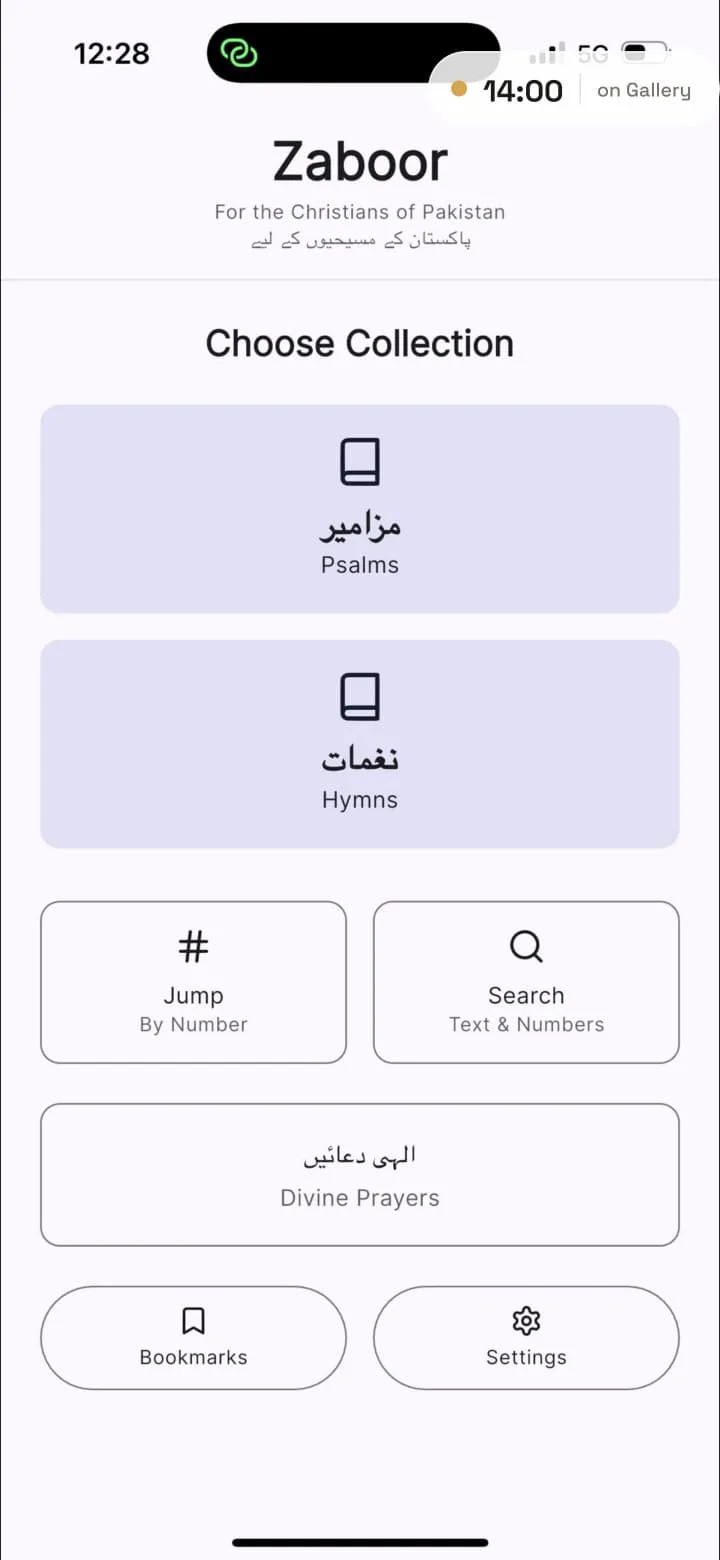
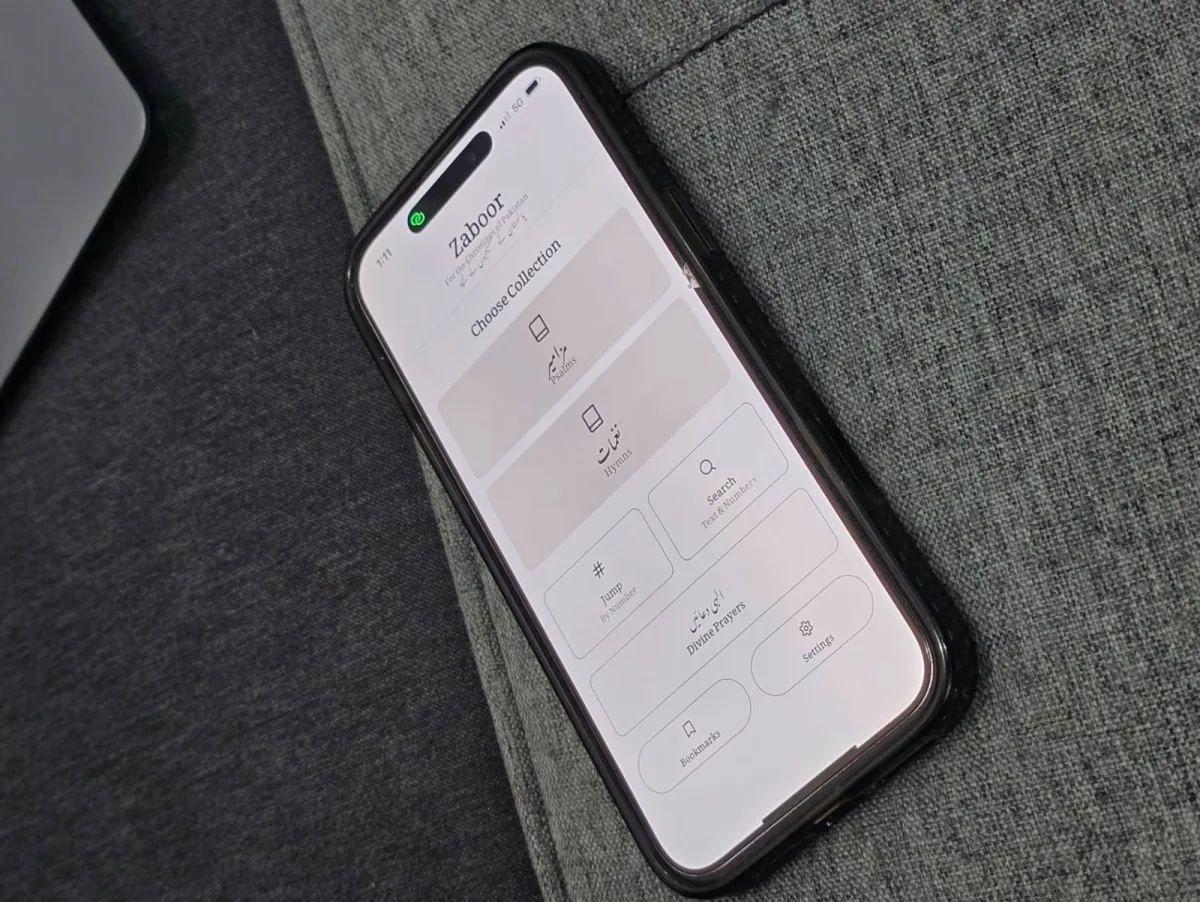
The answer shaped the home screen, and it has barely changed since the early prototypes. Large collection cards — مزامیر (Psalms), گیت (Hymns), دعائے عام (Common Prayers) — everything labelled in both Urdu and English so nobody is locked out by language. A Continue Reading card that drops you back where you left off. A bar with bookmarks, videos and settings. Nothing else competing for the tap.
Everything is indexed by number, because that is how hymns are actually called out in a service. Every song carries the page number from the printed hymnal beside it, so the app and the book stay in sync and a congregation can use both at once without anyone getting lost. Each song also carries its type and topical tags: grace, redemption, praise.
The hard part was never the interface
The hard part was the content. Getting 150 Psalms and more than 300 hymns into a clean, consistent, searchable database — schema design, data entry, transliteration, verification — is where the long nights went. Samson and Simon did that work between them across roughly six weeks, from the idea on 4 September to release on 18 October 2025.
Because the content is text and lives on the device, the app works completely offline. No signal in the church hall, no problem. The one exception is the worship videos, which are links out to recordings, so that feature needs a connection when nothing else does.
Launch, and growing the way a hymnal grows
Zaboor went live on Google Play and the App Store on the same day, 18 October 2025. Then it grew the way a hymnal grows: one person showing another at church.
Twenty downloads. Then fifty. The first hundred felt enormous, and it came with almost no marketing behind it, just telling people directly. Then two hundred, five hundred, a thousand.
The number that actually landed was daily active users. Watching it pass a hundred meant a hundred real people had opened the app that day, most of them mid-service. That is when it stopped feeling like a side project.
The users became the roadmap
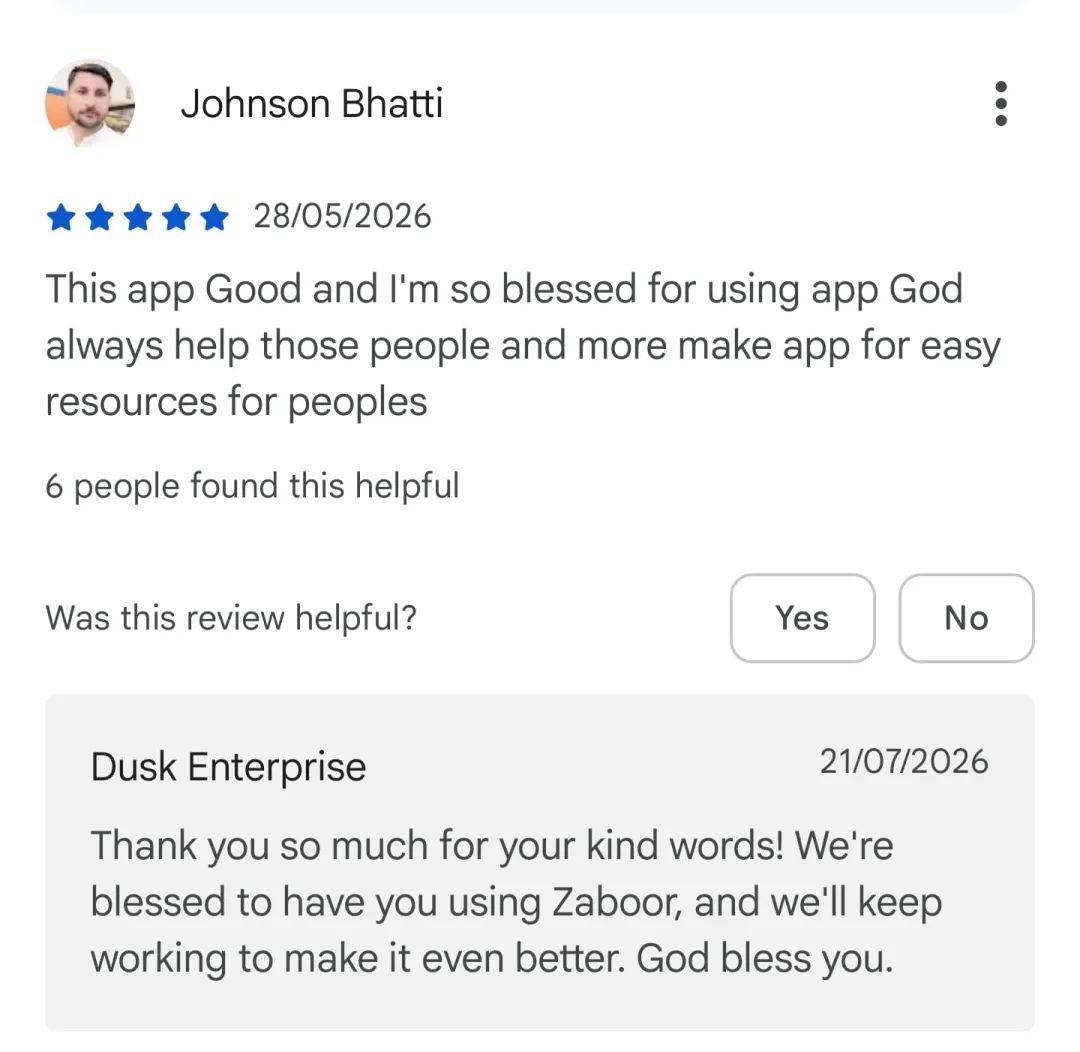
We answered every review. That turned out to be the most useful development process we have ever run. People wrote in asking for specific geets that were missing — songs their family sang, songs from their own congregation — and those went into the next update. Over and over. The catalogue grew because people told us what was absent from it.
The single biggest feature came from outside the two of us. Rev. Clement Maurice, of the Church of Pakistan, asked why the app couldn't link to recordings of the hymns on YouTube, so that someone could not only read a geet but hear how it is sung. We built it and linked recordings across the catalogue. Videos ended up with its own place in the navigation bar, alongside home, bookmarks and settings, which is roughly how important it turned out to be.
Daily active users went from around three hundred to around seven hundred after that shipped. It remains the clearest lesson the project has taught us: the person who knows what the app is missing is usually not the person building it.
The log
Where it is now
The app has been redrawn since those first screenshots. Same structure, warmer surface, a third collection, and Videos in the navigation bar.
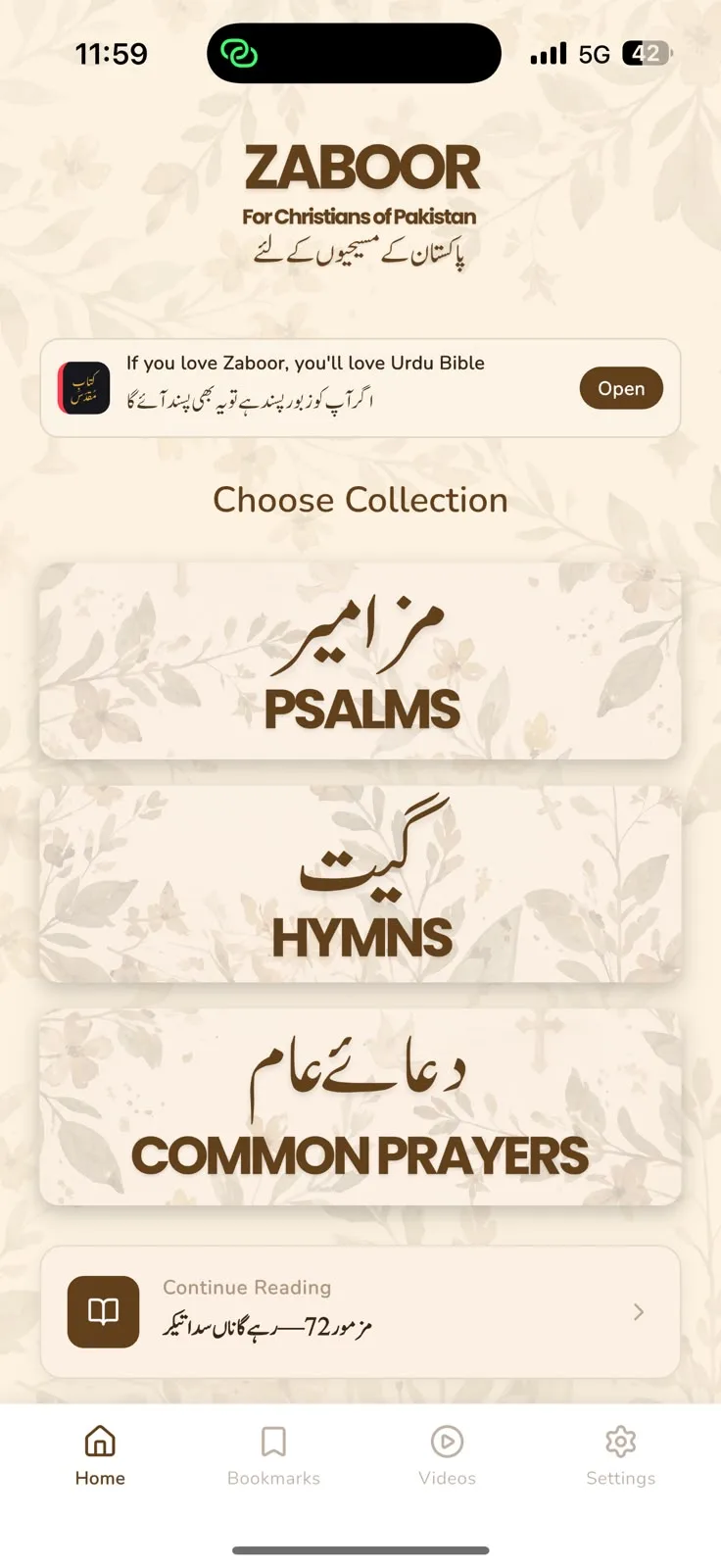
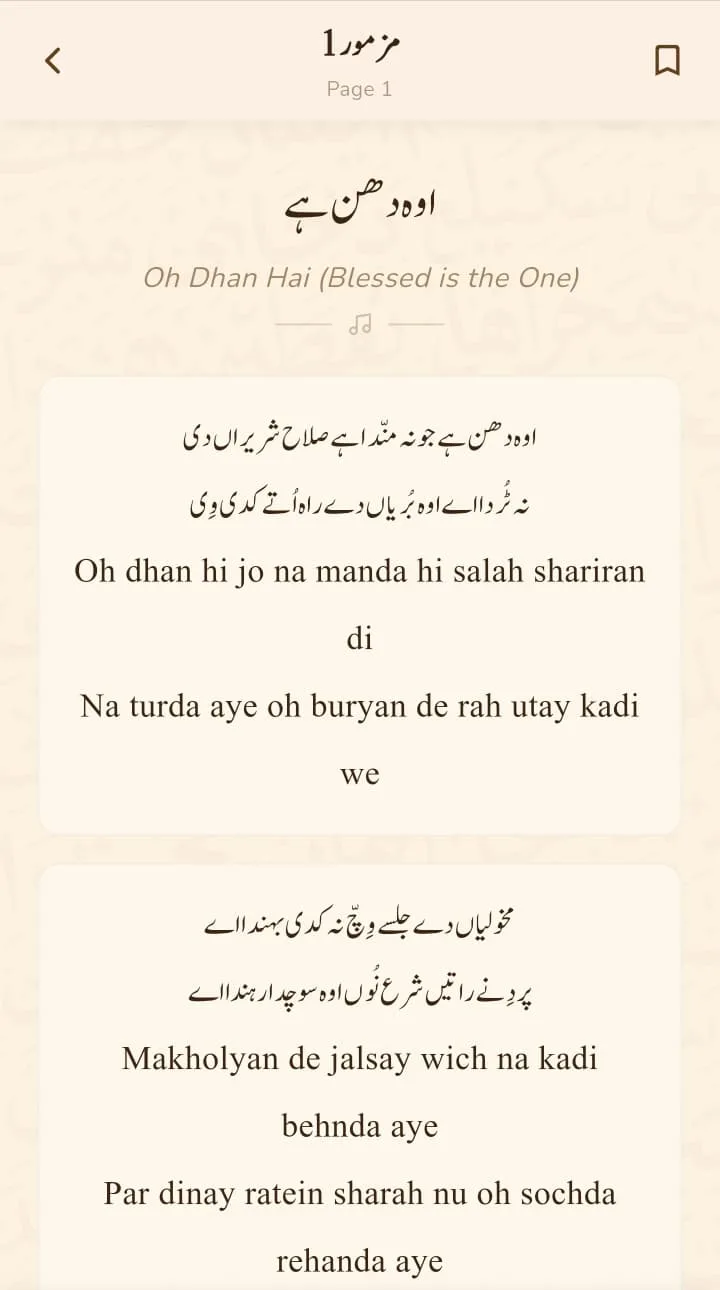
Approaching its first anniversary on 18 October 2026: more than 25,000 downloads across iOS and Android, around 700 people opening it daily, 4.8 stars, and users in more than ten countries — Pakistan, India, the UAE, Saudi Arabia, the United States and beyond. A hymnal for a community that is scattered turns out to travel with it.
What drove that was word of mouth inside the Pakistani Christian community, not paid marketing. The app spread the way a hymnal spreads: one person showing another at church.
What's next is more of the same, plus the open questions we haven't answered yet. Audio playback of our own rather than links out. A congregation or projector mode. Sharing a song directly. Editions for individual churches. Nothing is scheduled; the app is updated whenever somebody tells us a song is missing.
One thing it deliberately isn't: a Bible. If you're looking for scripture in Urdu, that's Urdu Bible, a separate free app we build. The full feature list and the store links live on the Zaboor app page.
Past 25,000 downloads, around 700 people opening it daily, 4.8 stars. Still free, still no ads, still updated whenever somebody tells us a song is missing.