Articles & Insights
Deep dives on product, design and engineering — written by the team that ships them.
Bible app vs printed Bible: what changes
A Bible app and a printed Bible hold the same text in different objects. What changes in weight, search, text size and battery, and what does not.
Latest
How to find a verse when you forget the reference
You remember the words but not the chapter. How full-text search finds a verse from a fragment, which words to search for, and which ones waste your time.
Is there a free Urdu Bible app with no ads?
Yes. Urdu Bible is free, carries no advertising and asks for no account. Here is what free actually costs to run, and why we chose it anyway.
How to read the Bible in Urdu without the script
You can read the Bible in Urdu without knowing Nastaliq by using a Roman Urdu edition: the same Urdu words, spelled in the Latin letters you already read.
How to read the Bible at night without eye strain
Night mode gets the credit, but text size does most of the work. What actually reduces eye strain when reading scripture in bed, for tired and older eyes.
Why can't I read Urdu even though I speak it?
Speaking a language and reading it are learned in different places. Why fluent Urdu speakers never picked up the script, and why that is completely ordinary.
Transliteration vs translation: the difference
Transliteration changes the alphabet and keeps the words. Translation changes the words to carry the meaning. Why the difference matters for scripture.
Why Urdu Bible collects no data at all
Urdu Bible declares no data collected and no data shared on its store listing. What that declaration means, how to check it, and what it costs us.
Urdu Bible vs Zaboor: which one do you need?
Urdu Bible holds all 66 books of scripture. Zaboor holds Psalms, hymns and prayers to sing. What each app contains, and which one you actually want.
What is a reading Bible edition?
A reading Bible is defined by what it leaves out: no verse numbers, no cross-references, no notes. Here is why publishers strip them, and what it costs.
What is an offline Bible app?
An offline Bible app ships the whole text inside the install, so reading fetches nothing and records nothing. How to tell if one really works offline.
What is Nastaliq, and why is Urdu written in it?
Nastaliq is the sloping calligraphic script Urdu is set in. Where it came from, how its letters behave, and why it took until 1981 to print properly.
What is Roman Urdu, and who reads it?
Roman Urdu is the Urdu language written in the Latin alphabet. Where it came from, why its spelling is never fixed, and who reads it instead of the script.
What we left out of Urdu Bible, and why
No commentaries, maps, footnotes, streaks or reading plans. What we left out of Urdu Bible, and the line we drew about what a software studio should do.
Why Nastaliq text breaks in most apps
Urdu renders flat and wrong in most apps because no Nastaliq font is loaded, so the text falls back to naskh. This site had the bug too, and here is the fix.
Why we build for Urdu-speaking Christians first
Because it is the audience we belong to and can check our own work against. The practical case for starting with a small group, and how it goes wrong.
Why we built Urdu Bible, a Bible in two scripts
A grandparent reads Nastaliq and a grandchild reads only Latin letters. One book leaves one of them out, so we built an Urdu Bible that leaves neither.
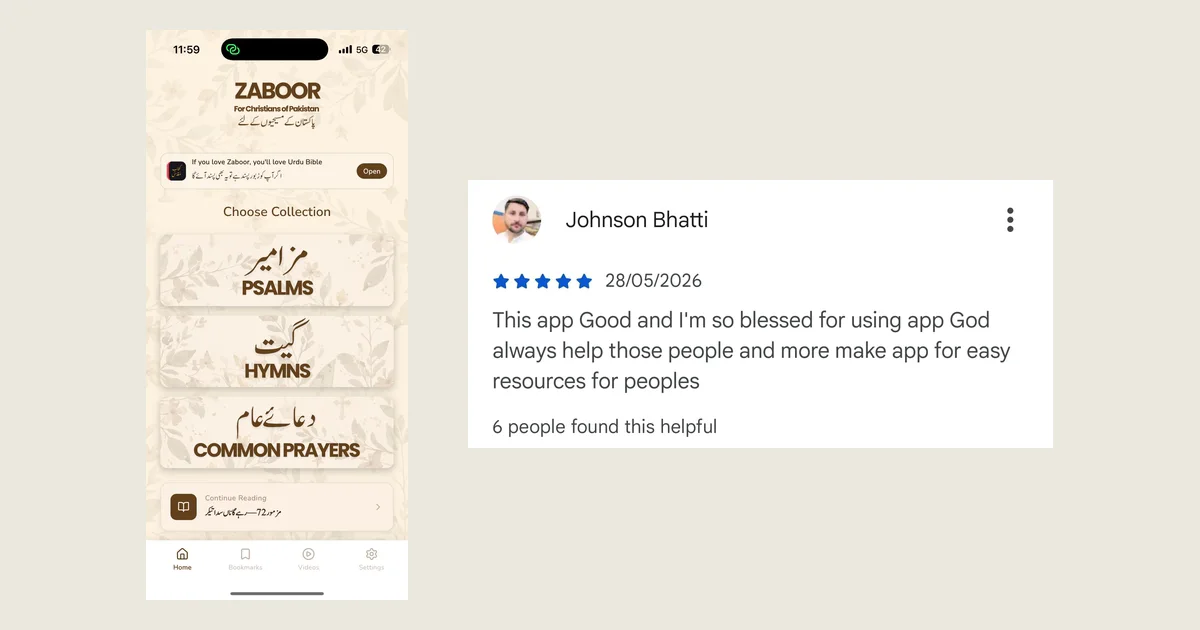
Why we built Zaboor, a digital Urdu hymnal
We built Zaboor because a congregation loses the first verse of every hymn to a page hunt. Here's the story, the two decisions behind it, and what happened.
PDF menu vs 3D menu: which should your QR code open?
PDF menu vs 3D menu: both open from a QR code, but only one shows guests the dish. What changes for guests, for staff, and every time you edit a price.

3-day vs 6-day Push Pull Legs: which should you run?
3-day vs 6-day Push Pull Legs: the 6-day trains each muscle twice a week, which research favours, but only if you attend. Here's how to choose honestly.

How to keep a brag document for review season
How to keep a brag document for review season: one running note, a five-minute Friday habit, and your self-review assembles itself in an afternoon.

How to break a bench press plateau
Break a bench press plateau by checking the log first: most stalls are missed sessions or low volume. Then change one variable and hold it a month.

How to start tracking workouts in 5 minutes
Start tracking workouts in five minutes: log exercise, weight and reps for every work set, then beat one number next session. The whole setup is here.

Push Pull Legs vs Upper Lower: how to choose
Push Pull Legs vs Upper Lower: both build muscle, so choose by how many days you can really train. Here's the research and a ten-second decision rule.

How to start a wins journal in five minutes
Start a wins journal in five minutes: pick one place, write one line about one recent win, and stop. Here's the setup and the rule that keeps it alive.

What counts as a win worth writing down?
What counts as a win worth writing down? Anything that cost you something: effort, fear, or restraint. The size doesn't matter. Here's a simple test.

What is a brag document?
A brag document is a running record of your accomplishments at work, kept so review season doesn't depend on memory. Here's what goes in one and why.

What is a wins journal (and why keep one)?
A wins journal is a record of things that went right, kept so you can reread them later. Here's why it works, and what it does that memory can't.

What is progressive overload? A plain-English guide
Progressive overload means gradually asking your muscles to do more over time. Here's what it means in plain English and how to apply it in the gym.

What is the cookie jar method?
The cookie jar method is a mental technique: collect your past wins and deliberately revisit them when things get hard. Here's how to build yours.
What is training volume, and why do lifters track it?
Training volume is the total work you do in the gym, usually counted as hard sets per muscle each week. Here's why lifters track it and how to start.

Why we built Cookie Jar, a jar for your wins
We built Cookie Jar because every journal we tried demanded streaks and reflection, and we wanted somewhere to keep the good days. Here's the story.

Why you forget your wins (and how to fix it)
You forget your wins because the brain weighs bad events more than good ones, a bias research has measured. The fix: write them down, reread them.

Wins journal app vs notes app: an honest comparison
Wins journal app vs notes app: writing wins down works anywhere, but the point is getting them back on a bad day. Here's an honest comparison.
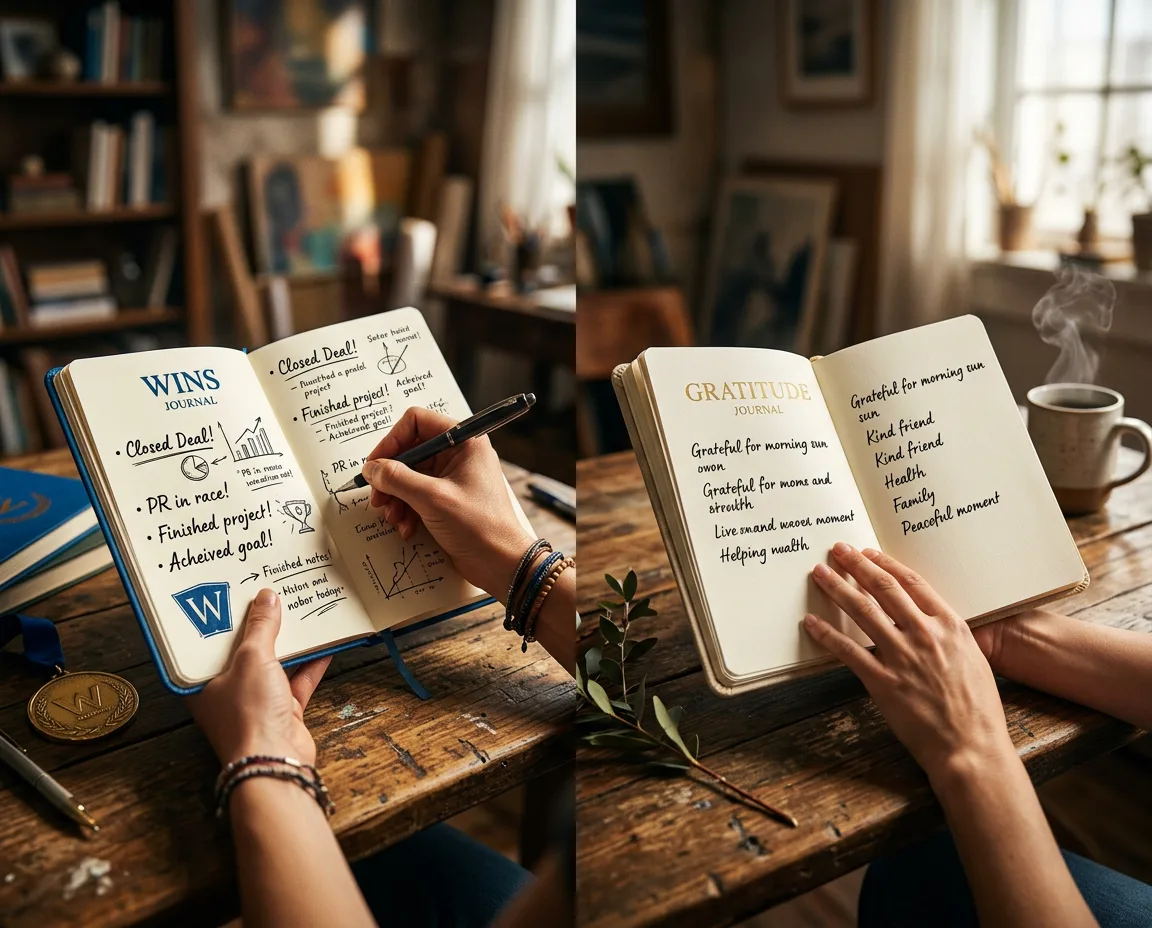
Wins journal vs gratitude journal: the difference
Wins journal vs gratitude journal: one records what you did, the other what you're thankful for. Here's the real difference and how to choose yours.

Workout app vs notes app: what actually matters
Workout app vs notes app for lifting: what matters is seeing last session's numbers while you train. Here's when notes work, and when they stop.

How a 3D menu changes the way people order
A 3D restaurant menu lets guests see each dish before they order. Across twelve venues, mis-orders fell 31% once people could see what was coming.