Why we built Zaboor, a digital Urdu hymnal
We built Zaboor because finding a hymn in a printed book takes longer than the first verse lasts.
The idea arrived on a Thursday evening in September 2025, during a service of the Church of Pakistan in Kuwait, and it arrived as an irritation rather than an idea.
In short
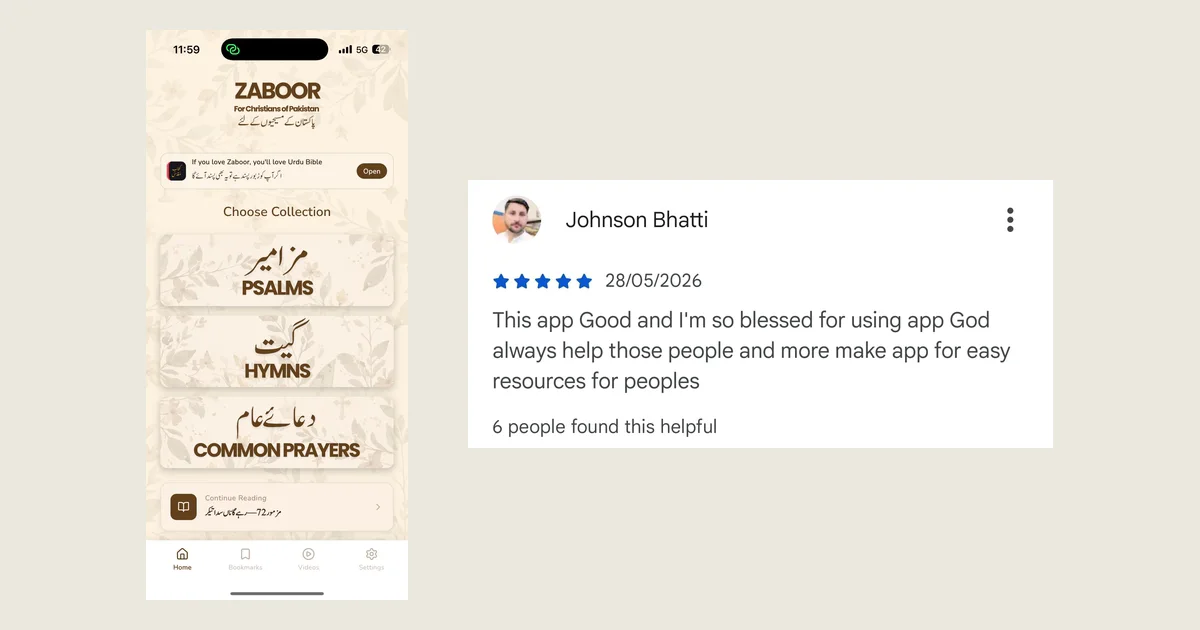
- Zaboor is a free hymnal app for iPhone and Android by Dusk Enterprise: 150 Psalms and more than 300 hymns and geets, in Urdu, Punjabi and English.
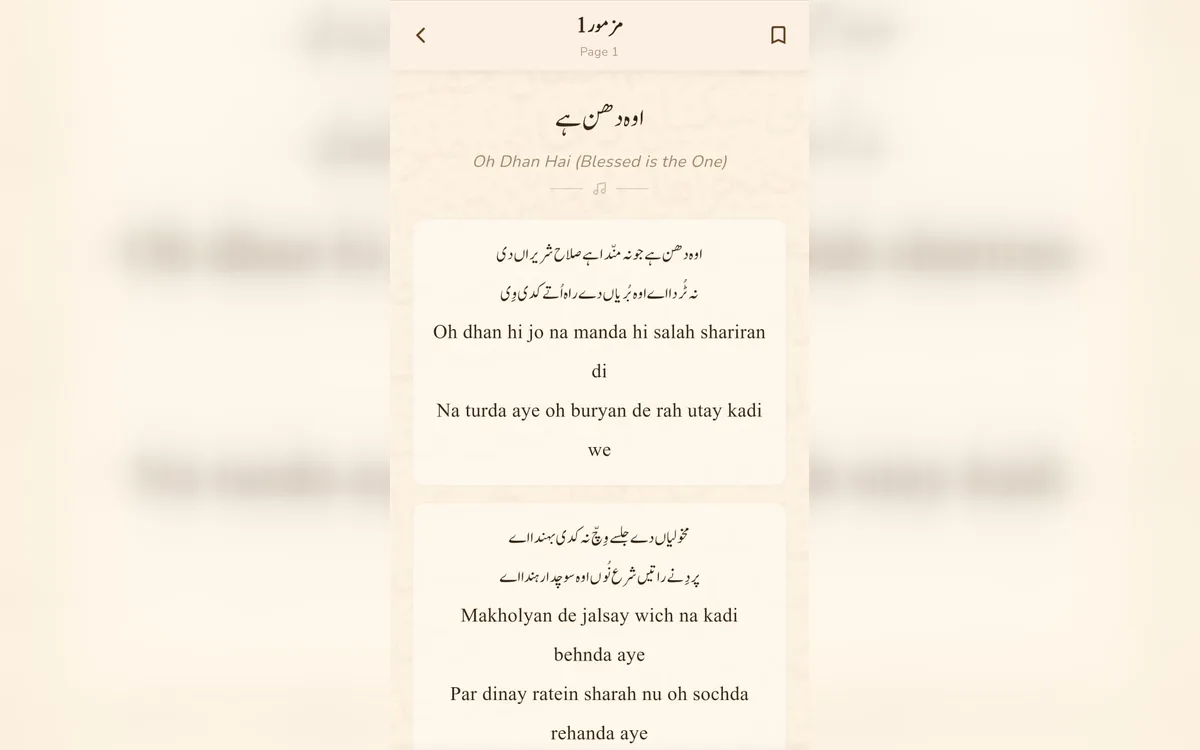
- Every song carries Roman Urdu next to the Urdu script, so people who speak Urdu but don't read the script can sing along.
- It works fully offline, carries no ads, and is past 25,000 downloads.
Why did we build Zaboor?
We built Zaboor because a hymn number gets called out and the room stops singing to go and find it.
In an ordinary service, a number is called. Pages start flipping. People lean across to see where their neighbour landed, and two or three share a book because they didn't bring their own. By the time most of the room has the right page, the first verse is over. This happens every week, and everyone has quietly accepted it as the price of singing together.
Sitting there, the fix was obvious in the way it probably only is if you write software for a living. Everyone in that room already had a phone in their pocket, and hymns are text. That is the entire problem.
Downloads were never the number we watched, though. A different one told us whether the thing was working, and it later doubled for a reason neither of us thought of.
What two decisions shaped the app?
Two decisions got made that first evening, and both of them turned out to be the product.
The first was Roman Urdu. A large part of the Pakistani Christian community speaks Urdu fluently but cannot read the script comfortably, and that includes both of us. We know the hymns by sound, because we learned them by hearing them. A hymnal in Urdu script alone serves the people who were already doing fine with the printed book, so Zaboor carries both, stacked together, and you follow whichever line you read.
The second was no ads, ever. Zaboor has never made money and was never meant to. Putting an advertisement between a person and a hymn, during worship, would have broken the one thing it exists to do. Neither decision was a business decision. That is precisely why we could make them.
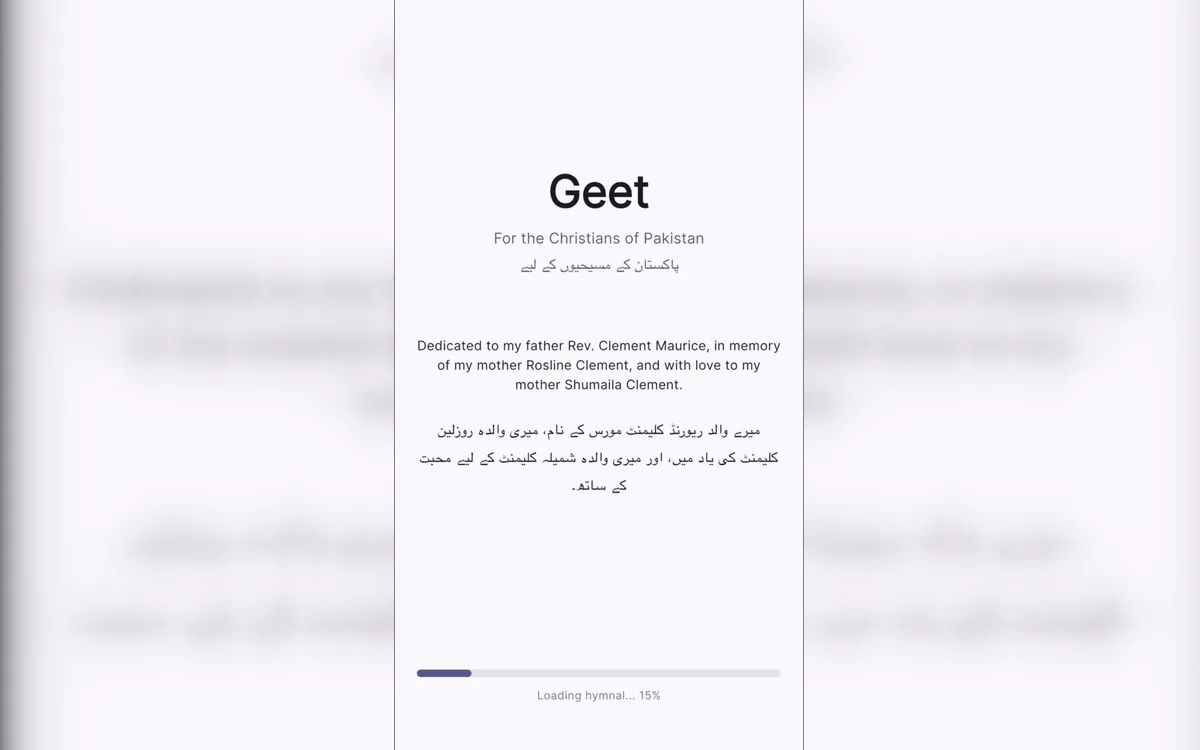
It wasn't even called Zaboor at first. The working name was Geet, the everyday word for the songs. It changed before launch, but open the app today and the second collection is still گیت.
What was the hardest part of building a hymnal app?
The content was the hard part, not the interface. Designing the hymn database, entering 150 Psalms and 300-odd hymns, and checking the transliterations line by line is where the six weeks between the idea and the release actually went.
The screens came out of one question: what does a person need in the two seconds between hearing a number called and needing to be singing? So everything is indexed by number, because that is how hymns are called out, and every song carries its page number from the printed book, which lets a congregation use the app and the hymnal at once.
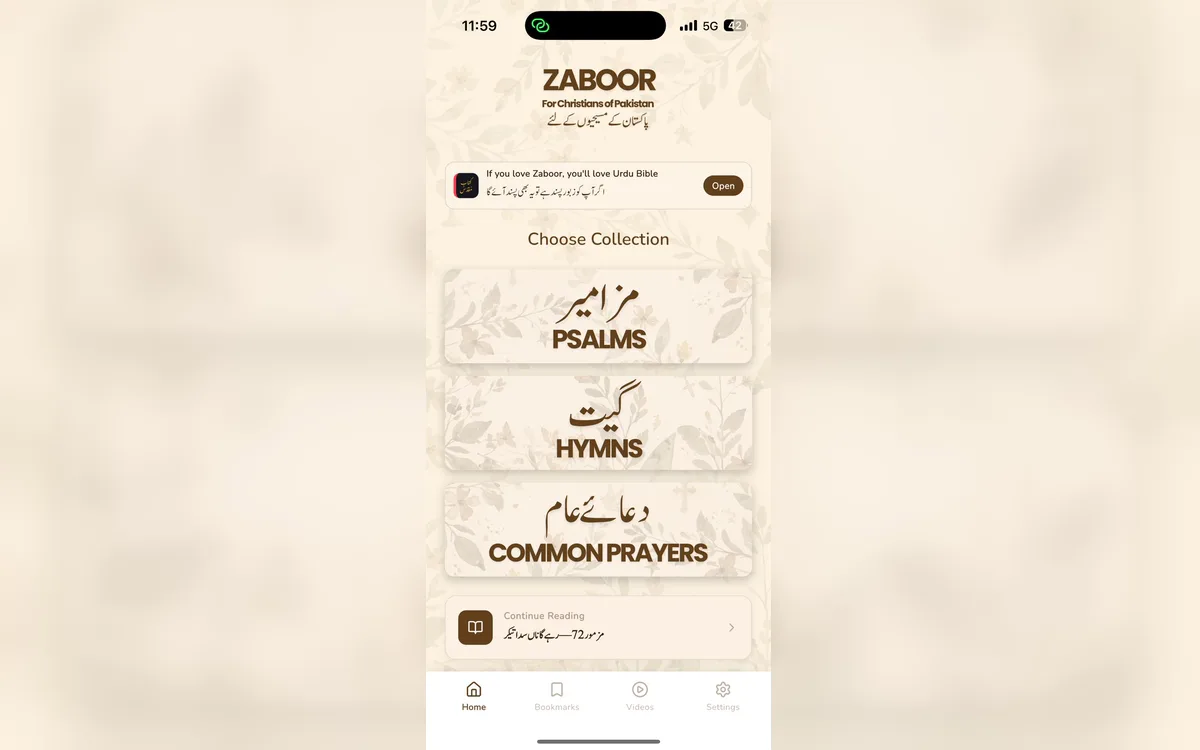
Because it is all text and all stored on the device, the app works with no signal at all, which matters in a hall with no reception. The honest exception is the worship videos: those are links out to recordings, so that one feature needs a connection when nothing else does.
What happened after we launched?
Zaboor went live on the App Store and Google Play on the same day, 18 October 2025, and grew the way a hymnal grows, one person showing another at church. Twenty downloads, then fifty. The first hundred felt enormous.
The number that actually mattered was daily actives, because watching it pass a hundred meant a hundred real people had opened the app that day, most of them mid-service.
Then we answered every review, which turned out to be the most useful development process we have run. People wrote in asking for geets that were missing, songs their family sang, and those went into the next update. The biggest feature came from outside the two of us entirely: Rev. Clement Maurice, of the Church of Pakistan, asked why each hymn couldn't link to recordings on YouTube, so a person could hear how a song is sung and not only read it. We built it. Daily actives went from around three hundred to around seven hundred after it shipped.
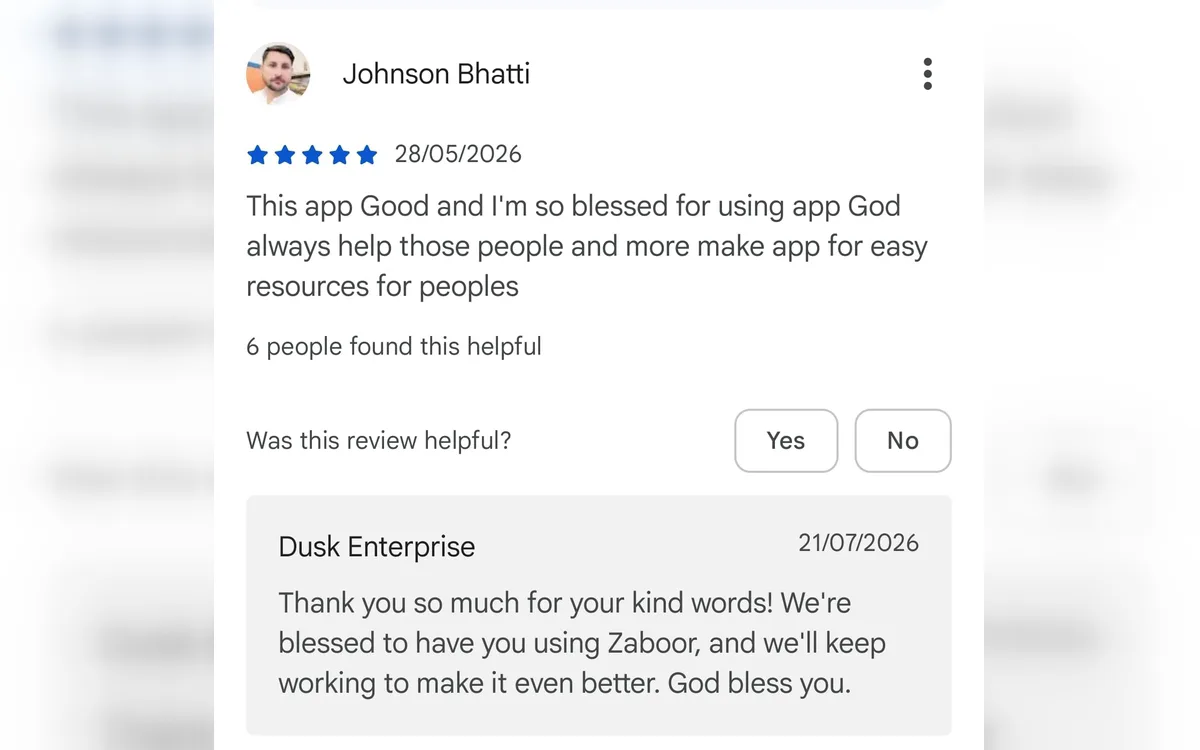
The person who knows what an app is missing is usually not the person building it. We learned the same lesson a different way with Cookie Jar.
Where is Zaboor today?
Past 25,000 downloads, around 700 people opening it daily, and 4.8 stars. Still free, still no ads, and still updated whenever somebody tells us a song is missing. It is deliberately not a Bible; for scripture in Urdu, that is Urdu Bible, a separate free app we build.
If your congregation loses the first verse every week, put Zaboor on your phone before the next service and jump straight to the number.