How a 3D menu changes the way people order
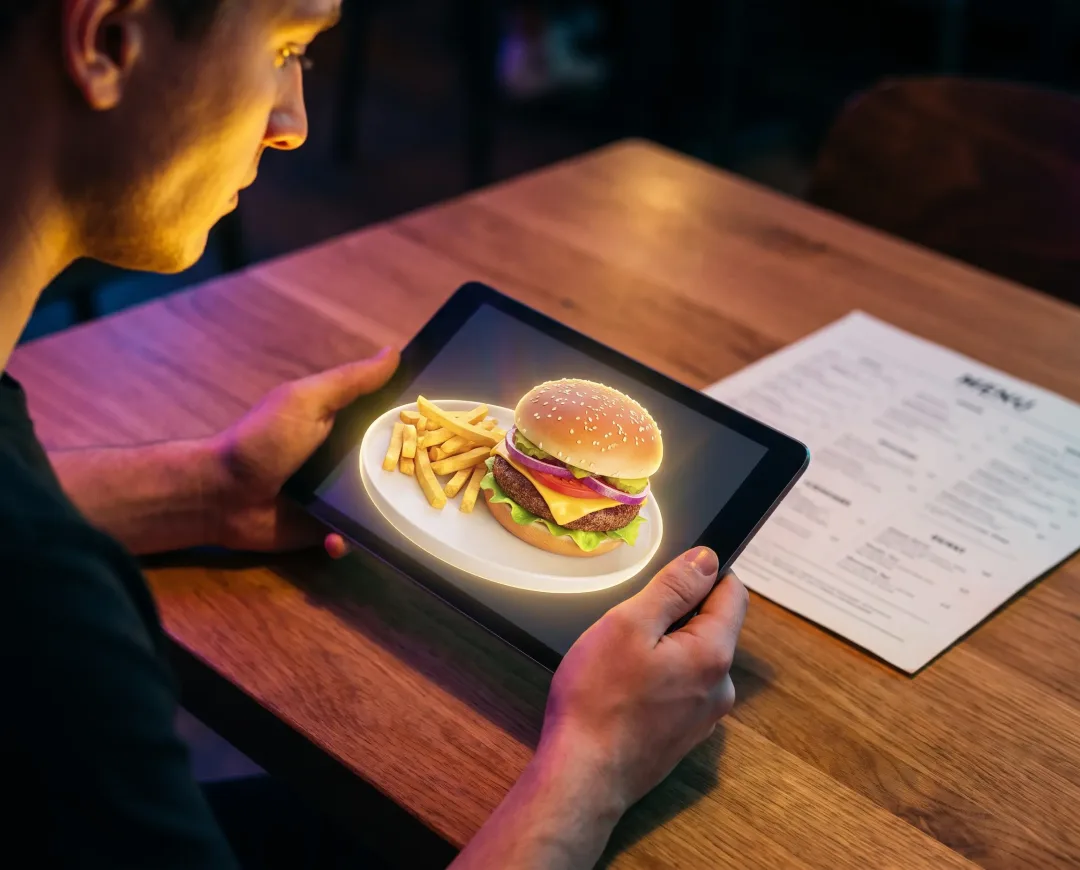
Most menus ask people to imagine the food. A 3D menu shows it: every dish turnable and zoomable on the guest's own phone, before anything is ordered.
We built one, watched twelve restaurants run it, and the pattern is consistent. When guests can see the plate, they stop guessing.
In short
- A 3D menu is a digital menu where guests scan a QR code at the table and inspect real dishes as 3D models in their phone's browser. No app to download.
- Seeing the actual portion and presentation changes behaviour: guests ask fewer questions, order with more confidence, and try dishes they'd normally skip.
- Across twelve venues, menus are now scanned about 40,000 times a month.
The most interesting change didn't happen at the table, though. It showed up in the kitchen, as one number every owner asks us about. We'll get to it.
What is a 3D menu?
A 3D menu is a digital restaurant menu where dishes are captured as photoreal 3D models that guests can rotate and zoom on their own phone, usually opened by scanning a QR code at the table. "Photoreal" means the model is built from photographs of the actual dish, so what spins on the screen is what arrives on the plate.
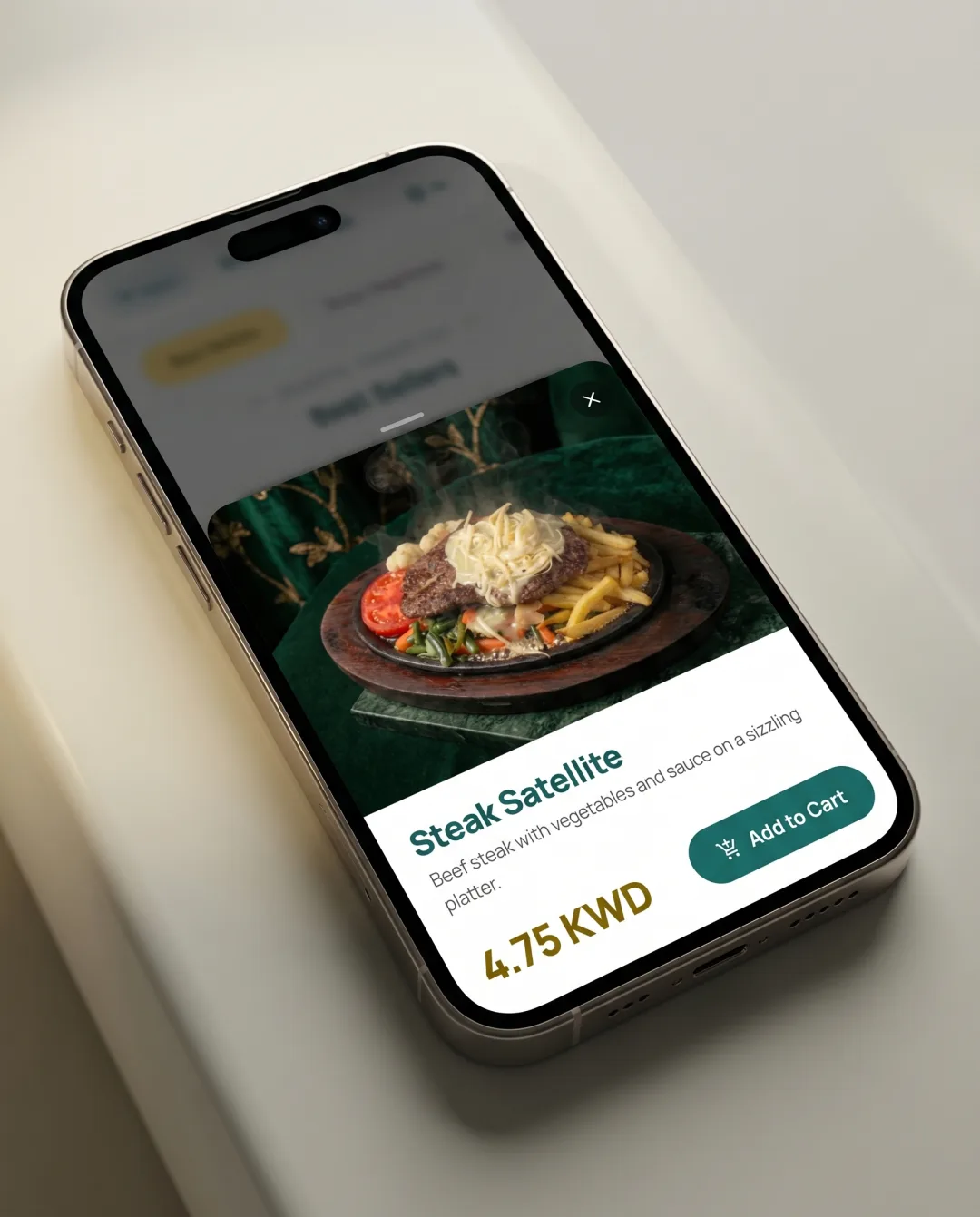
Nothing gets installed. The menu opens in the phone's browser, best-sellers appear as 3D models, and every other dish gets a photo, a description, and a price. That's the shape of 3D Menu, the system we run in restaurants today.
Why does seeing a dish change how people order?
People decide what to eat with their eyes first: research on "visual hunger" shows that just looking at appetising food images produces measurable physiological and neural responses. A printed menu gives that instinct nothing to work with but a name and a price.
That gap is where bad orders live. The guest gambles, the photo flatters, the portion surprises, and the plate goes back.
A model you can turn removes the gamble. Guests check the portion before committing, see the melted cheese up close, and order the braver thing because it stopped being a mystery.
What happened when real restaurants tried it?
The first restaurant we built this for had a problem every owner will recognise: plates went back to the kitchen because nobody knew what they were ordering. He kept apologising to his guests.
Demo night told us everything. Guests didn't read the menu; they picked dishes up and turned them around. One customer spun the lamb shank twice and said "Oh, that's what it is." Questions to the waiters dropped that same evening, and orders got braver.
Across twelve venues, menus are now scanned about 40,000 times a month. The full story of the build, including the lazy susan we used as our first scanning rig, is in our studio journal.
What does a 3D menu change in the kitchen?
Here's the number we promised: mis-orders fell 31% within the first quarter. Fewer plates came back, and the ones that did were genuine kitchen errors, not misunderstandings.
A mis-order is expensive in every direction. The kitchen re-fires the dish, the table waits longer, and the original plate is usually waste.
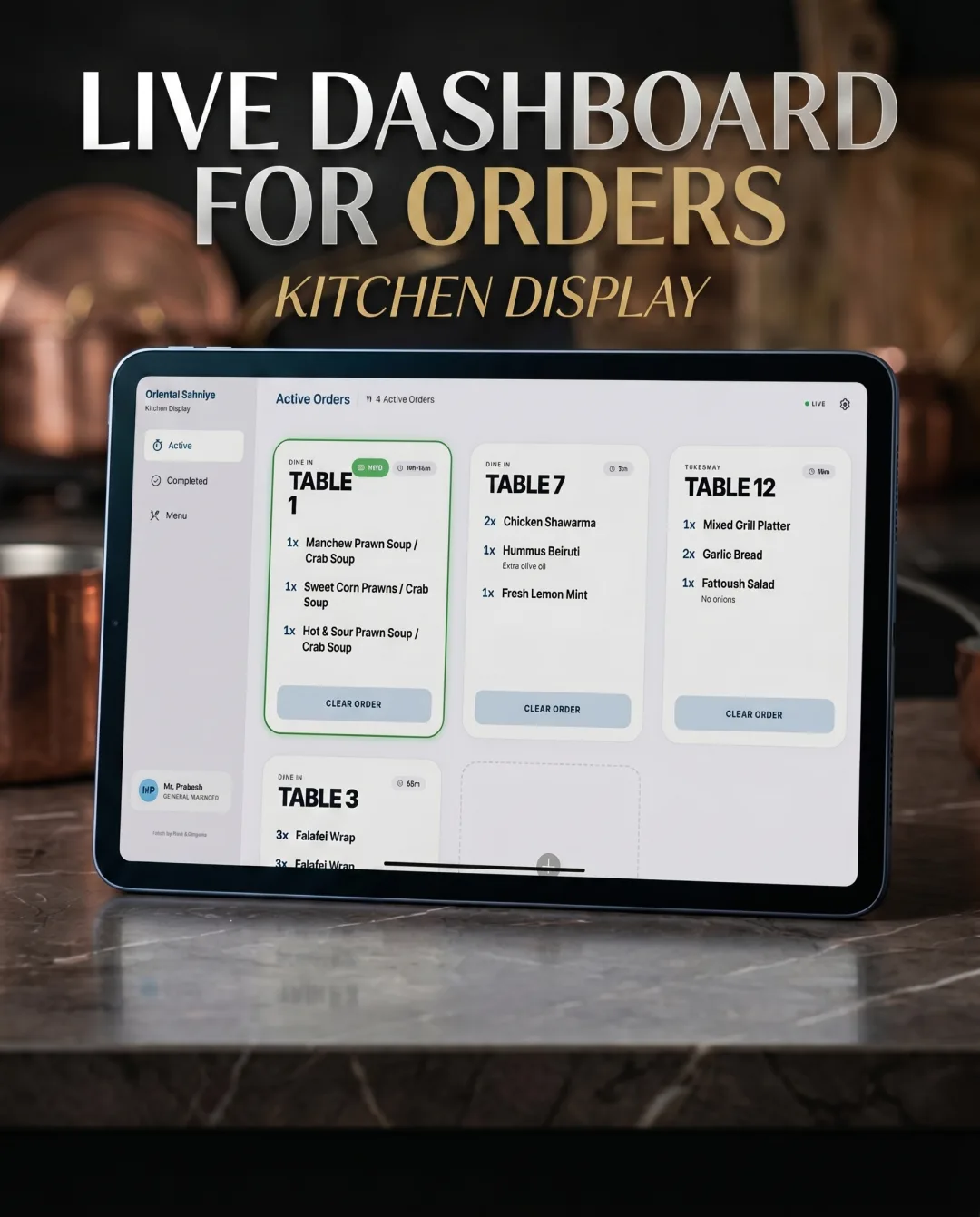
The 3D view removes the "that's not what I expected" returns, and the ordering flow removes most of the rest: orders travel from the guest's phone to a live kitchen dashboard exactly as entered, organised by table. No misheard items, no lost tickets.
What's the honest trade-off?
The trade-off is capture work: a dish has to be photographed from every angle before it can become a 3D model, and our first lamb shank took 214 photos.
That's why we don't put a whole menu in 3D. Best-sellers and signature dishes get models; the rest runs on photos and clear descriptions, which update on every table instantly. A kitchen that rewrites its entire menu weekly would keep the photo side current easily, the 3D side less so.
FAQ
Do guests need to download an app?
No. Guests scan the QR code at the table and the menu opens in their phone's browser. There's no app, no sign-up, and no account.
Does every dish need a 3D model?
No. Most restaurants put their best-sellers and signature dishes in 3D and present everything else with a photo, description, and price. Dishes and prices can be updated any time, and every table sees the change instantly.
How much does a 3D menu cost?
3D Menu is a one-time purchase with lifetime ownership. There's no monthly subscription and no setup fee; you buy it once and it's yours for as long as your restaurant is open.
If you want to see your own dishes this way, 3D Menu is the system we built for it: one QR code per table, a live kitchen dashboard, one purchase. Request a demo and we'll put your food in 3D before you decide.